Every feature in a jewellery ERP, billing, inventory, manufacturing, compliance, sits on top of something more basic that rarely gets discussed until it fails: does the platform itself hold up. Can last year's books still be trusted after this year's have been entered. Can a staff member only see what their role should let them see. Can the internet dropping for twenty minutes during a Saturday rush actually stop billing.
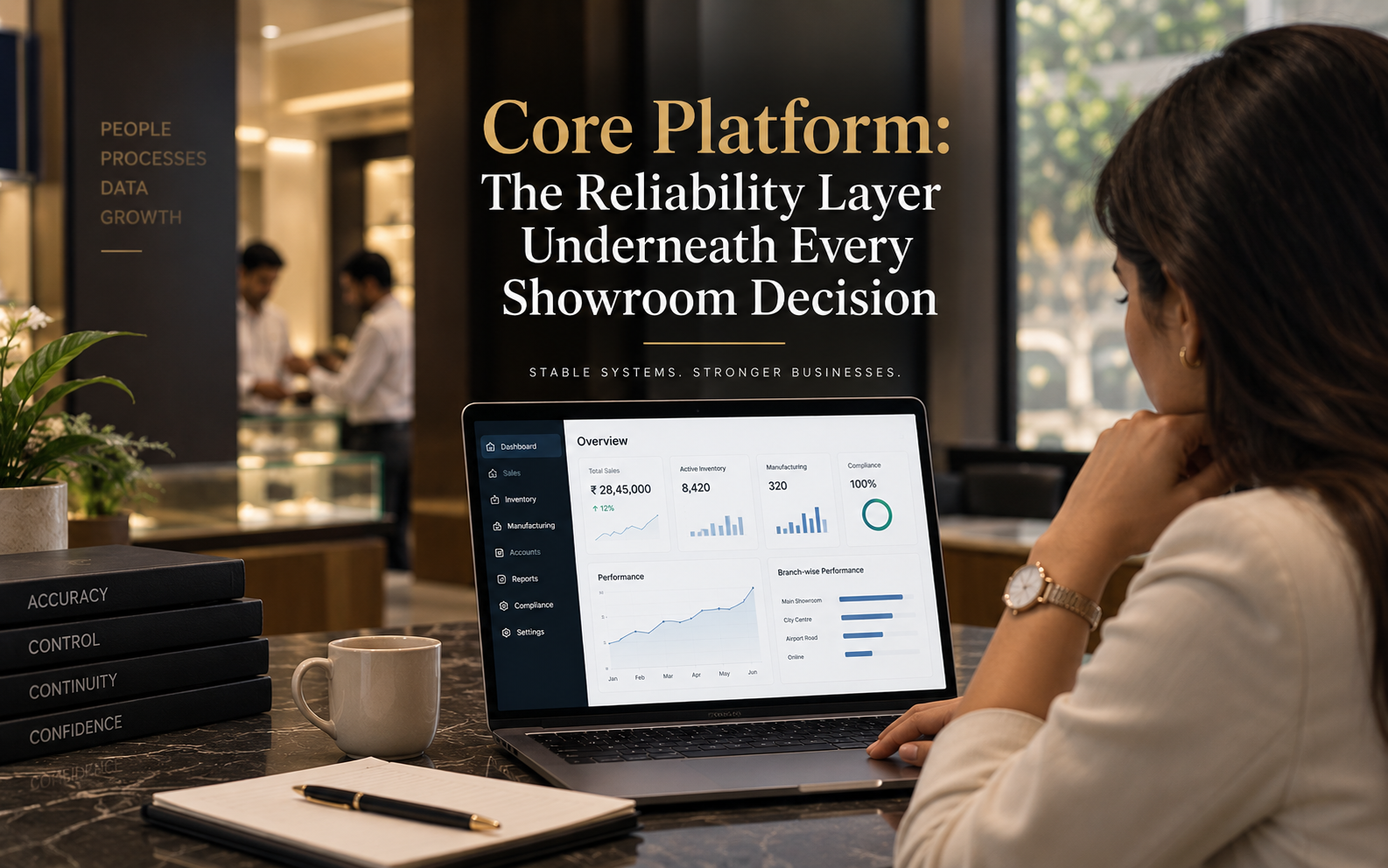
Most software gets judged on its most visible feature, billing speed, a stock report, a nice looking invoice, and Core Platform is deliberately none of those things. It is the layer underneath all of them, nine capabilities that do not show up as a single dramatic feature but decide whether everything built on top of them is dependable over years of daily use, not just in a first demo.
Multi Financial Year: Books That Do Not Break When the Year Changes
A showroom's financial history does not reset on April 1st, and neither should the software. Multi financial year support means past years stay intact, closed, and reportable, while the current year runs independently on top of them. An accountant pulling a comparison against two years ago should get a real answer, not a warning that the data was archived somewhere else or converted into a format the system can no longer read cleanly.
Role Based Access Control: The Right Screen for the Right Person
A counter salesperson, an accountant, and the owner need very different things from the same system, and giving all three the same access is not convenience, it is an unmanaged risk. Role based access control means a salesperson sees billing and their assigned customers, an accountant sees ledgers and transactions, and an owner sees everything, each limited to exactly what their job requires. This is what turns "we trust everyone" from a policy nobody actually enforces into a system that enforces it by default.
Audit Trail and Logs: Every Meaningful Change Stays Traceable
A discount changed at the counter, a stock adjustment made after hours, a journal entry edited two days after it was created. All of it should be traceable to a specific user at a specific time, without anyone having to remember to write it down. This matters twice over in a jewellery business. For internal accountability, mistakes and overrides stay visible rather than buried. For GST audits, a clean, automatic log of who changed what is the difference between a quick answer and a long investigation.
Our guide to jewellery accounting software covers how this same accountability extends into every ledger entry, not just the audit log itself.
Data Freeze and Period Lock: Closed Periods That Actually Stay Closed
Once a month or a financial year has been reconciled and reported on, nothing in it should be editable without a deliberate, visible override. Period lock keeps closed periods audit clean. A voucher from three months ago cannot quietly get modified and throw off numbers that were already reported to an accountant, an auditor, or a bank. This is a small feature that prevents a specific, recurring kind of chaos: numbers that were correct when the books closed and mysteriously are not correct anymore.
Day End Processing: A Structured Close, Not a Scramble
Closing a showroom for the day means reconciling stock, cash, and billing against each other, across however many counters and payment modes were active that day. Structured day end processing means that reconciliation follows the same steps every time, stock movement matched against sales, cash and digital payments matched against the day's totals. It does not depend on whichever staff member is closing up that night remembering the full checklist from memory.
Our guide to a jewellery management system walks through what a full day, including this close, actually looks like end to end.
Multi Printer Setup: Barcode, Receipt, and Thermal Printing That Just Routes Correctly
A single counter workflow touches at least two kinds of printing. A barcode or RFID tag when stock comes in, and a receipt or invoice when a sale closes, sometimes on a regular printer and sometimes on thermal. Multi printer setup means each job routes to the right device automatically. A tagging station does not need someone walking to the billing counter's printer, and a busy counter does not stall because the wrong print job is queued to the wrong machine.
Cron Job Scheduler: Recurring Work That Runs Itself
Nightly stock valuation, scheduled compliance reports, recurring reminders, a lot of what a jewellery business needs done regularly should not depend on a person remembering to trigger it. A cron job scheduler automates recurring jobs on a set timetable, so nightly and compliance tasks run on schedule in the background rather than becoming one more thing on a manager's mental checklist.
Offline Mode Capability: Billing That Does Not Stop When the Internet Does
An internet outage during peak footfall should not mean closing the counter. Offline mode capability keeps billing and stock moving locally when connectivity drops, then syncs everything back once the connection returns. A Saturday evening power or network blip costs a few minutes of inconvenience instead of an afternoon of turned away customers.
This is the same counter our guide to jewellery billing software covers in detail, offline mode is what keeps it running when the rest of the day does not go to plan.
Multi Company Architecture: Separate Entities, One Controlled Platform
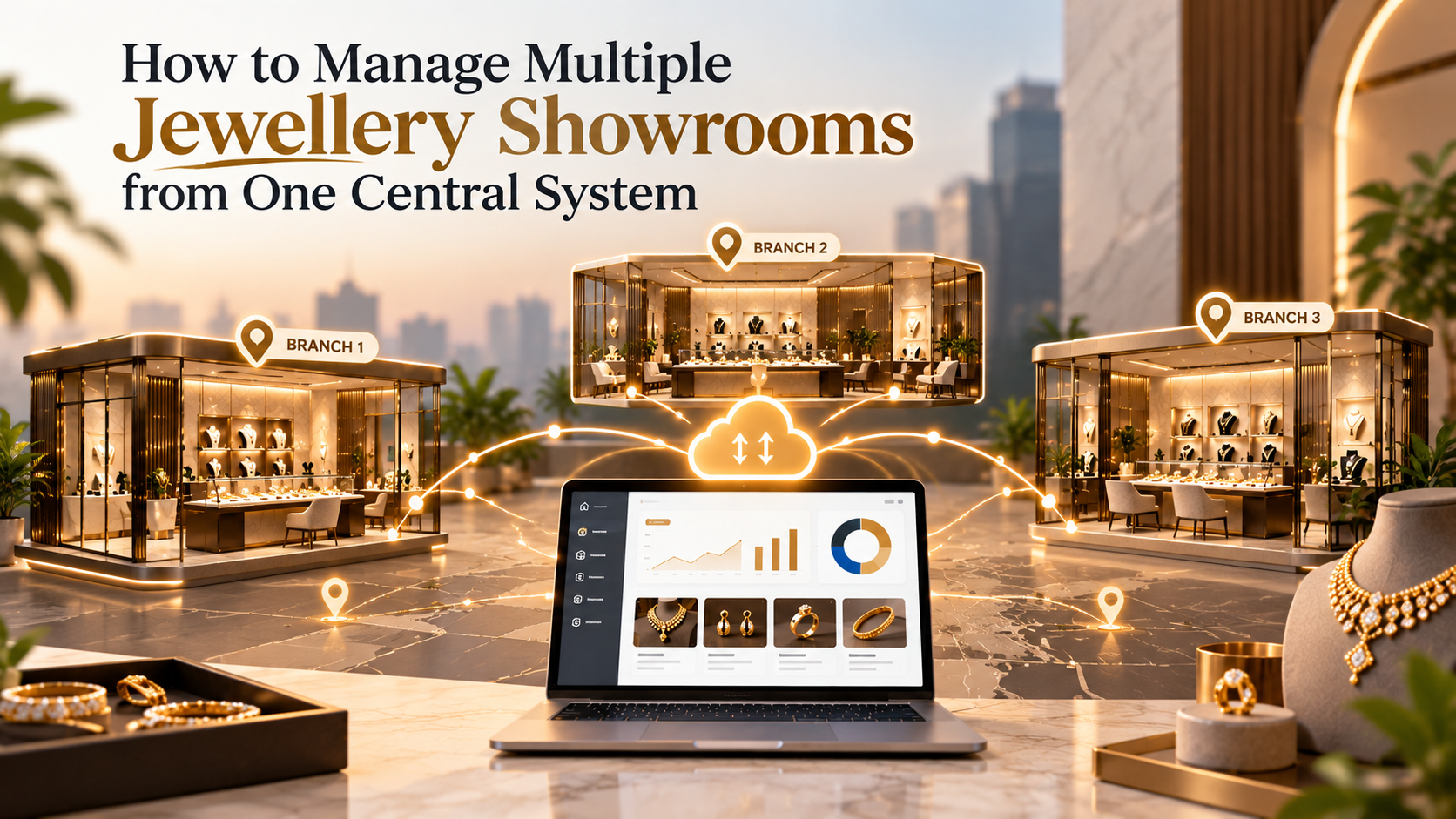
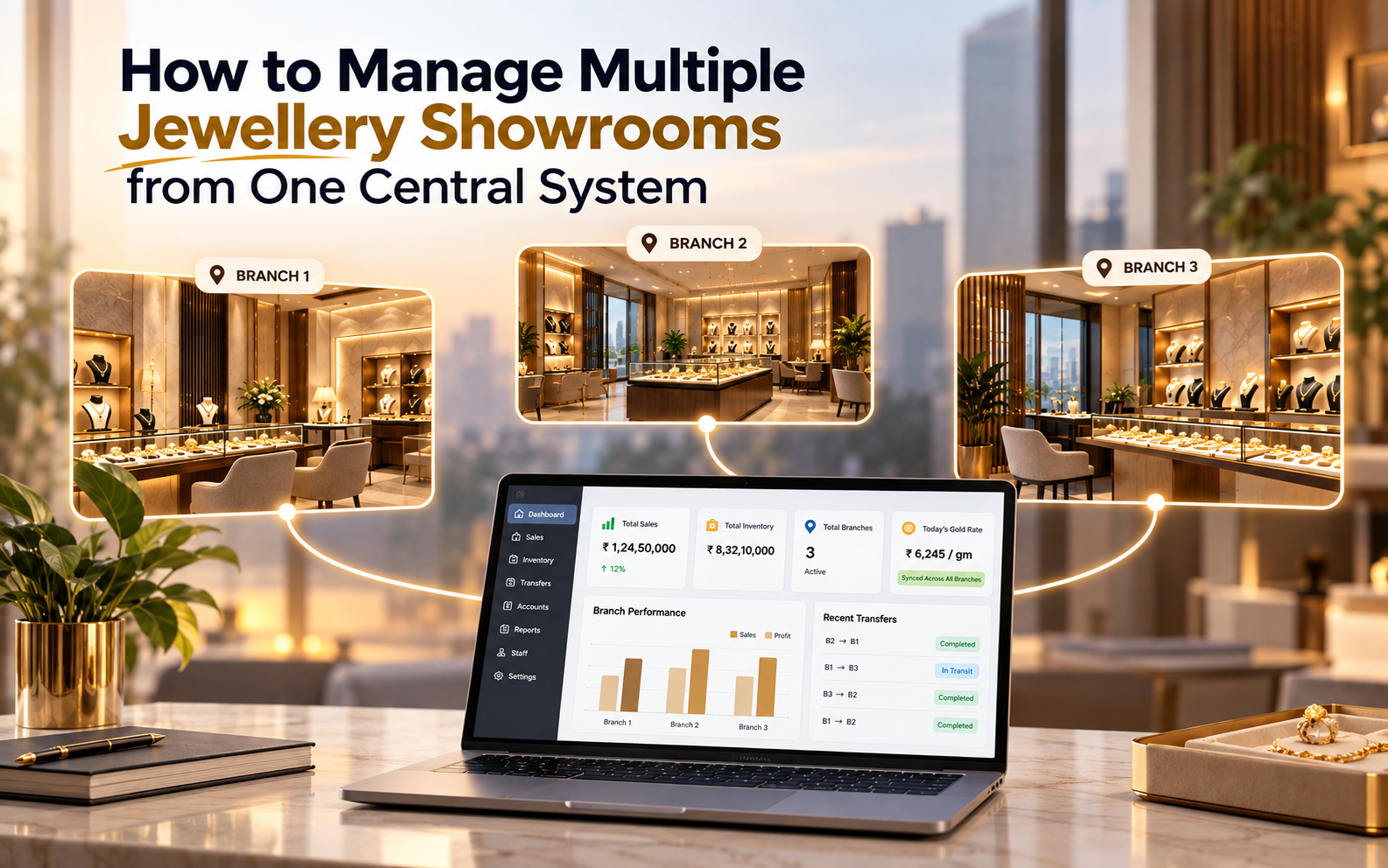
A business that operates as more than one legal entity, a retail arm and a manufacturing arm, or separate entities for different family branches, still benefits from running on one platform. Duplicate, disconnected installations create more work than they solve. Multi company architecture lets each entity operate independently, its own books, its own users, its own data, all while sitting on the same controlled system rather than requiring a completely separate setup per entity, the same connected principle behind shared stock visibility covered in our guide to jewellery inventory management.
Why These Nine Sit Under One Heading

None of these are the feature a jeweller thinks about first when evaluating jewellery ERP software, that is usually billing speed or stock accuracy. But every one of the nine determines whether the rest of the system can actually be trusted over years of daily use rather than just in a first demo. A billing engine that is fast but has no audit trail, or an inventory system that is accurate but breaks the moment the internet drops, is a system with a real gap underneath it. Core Platform is the layer that closes those gaps before they become a problem someone discovers the hard way.
Frequently Asked Questions
What is meant by 'core platform' in jewellery ERP software?
It refers to the foundational, non feature specific capabilities a system needs to be reliable over time: multi year data integrity, access control, audit logging, closed period protection, structured daily reconciliation, and resilience to things like connectivity loss. It is distinct from any single customer facing feature like billing or inventory.
Why does audit trail matter more for jewellery businesses specifically?
Jewellery transactions involve high values, frequent discounts and price adjustments, and strict GST scrutiny on making charges and metal value. An automatic, traceable log of every meaningful change protects the business in both directions, catching internal errors early and answering audit questions quickly.
Does offline mode actually keep a showroom fully operational without internet?
Core billing and stock functions should continue locally during an outage, with everything syncing back once connectivity returns. It is designed to prevent a short outage from stopping sales, not to replace a stable connection as the normal way of operating.
What happens to the data entered while a branch was offline once the connection comes back?
It should sync automatically against the central system the moment connectivity returns, with any conflicts, like the same item being sold from two different, temporarily disconnected sources, flagged for review rather than silently overwritten in either direction.
Can a locked period ever be corrected if a genuine mistake is found later?
Yes, but it should not happen quietly. A locked period should require a deliberate, visible override rather than a normal edit, so a correction after close is a documented exception, not something that blends invisibly into the original numbers.
How does role based access actually differ between a salesperson, an accountant, and an owner?
A salesperson typically sees billing screens and their assigned customers, an accountant sees ledgers, vouchers and financial transactions, and an owner sees everything across the business, reports, approvals and every module. Each role is scoped to what the job requires, not given blanket access by default.
Does the cron job scheduler need to be configured separately for every recurring task?
It should support a set timetable that recurring jobs, nightly stock valuation, scheduled compliance reports, reminders, run against automatically once configured, rather than needing to be manually triggered or separately rebuilt for each individual task.
Is multi company architecture only relevant for large jewellery businesses?
It matters most for any business already operating as more than one legal entity, which happens at a smaller scale in jewellery retail than people expect. A separate manufacturing entity or a family run second brand are both common even for a modest sized business.
See the Core Platform Running Underneath Your Own Data
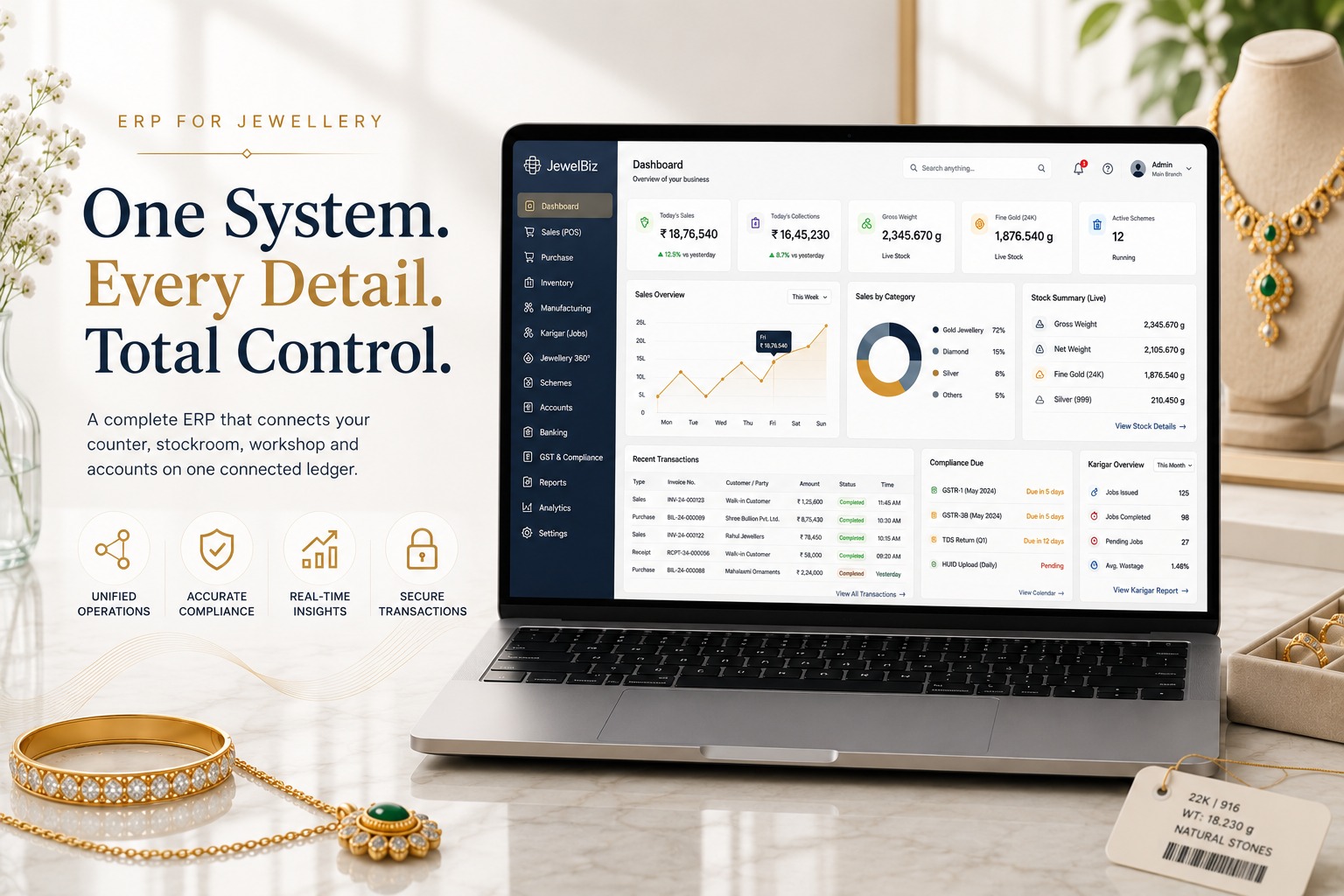
JewelBiz's Core Platform runs multi financial year books, role based access control, full audit trails, period locking, structured day end processing, multi printer routing, a cron job scheduler, offline mode, and multi company architecture as the foundation every other module sits on. Our guide to jewellery ERP software covers how this connects to billing, inventory, and compliance across the full platform.
If you want to see how it holds up on your own showroom's daily operations, reach out at info@slatebiz.com or call +91 92573 73668, or visit slatebiz.com to book a walkthrough.